
A fresh coat of paint can make a room feel completely new, but paint can only do so much when the wall underneath is damaged.
Cracks, nail pops, dents, holes, and water stains are all common drywall problems. Some are small and mostly cosmetic. Others can point to a bigger issue that should be addressed before anyone picks up a paint roller.
Knowing the difference can save you time and help you get a much better finished result.
Common Drywall Problems Homeowners See
Most drywall damage starts out looking minor.
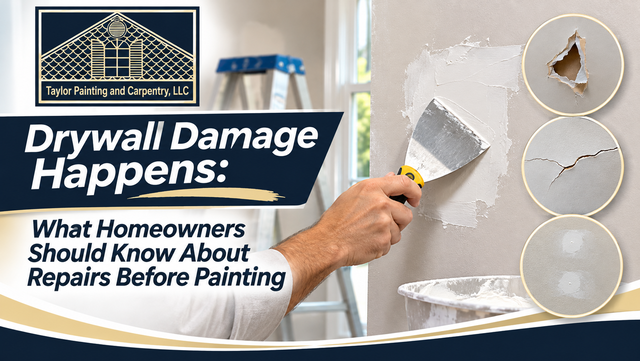
You may notice a small crack near a doorway, a nail head pushing through the surface, or a dent from moving furniture. Holes from wall anchors, shelving, pictures, and everyday wear are also common.
Then there are larger issues, including water-damaged drywall, soft areas, bubbling paint, or sections that have been opened for plumbing or electrical work.
The important thing is not to assume every problem can simply be painted over.
Why Repair Comes Before Paint
Paint does not hide damaged drywall nearly as well as people hope.
A crack that is still visible before painting will usually still be visible afterward. The same goes for uneven patchwork, ridges, dents, and poorly sanded repairs.
Good drywall repair is really about preparing the surface correctly. That may mean filling small holes, repairing seams, replacing damaged sections, sanding the area smooth, and priming before the finish coat is applied.
When that work is done properly, the wall should look like one continuous surface instead of a collection of patches.
When Is a Small Patch Enough?
Small repairs can often be handled without replacing a large section of drywall.
Minor dents, nail pops, small anchor holes, and light surface damage may only need patching, sanding, and primer.
Larger holes or damaged sections usually require more work. The area may need to be cut out, new drywall installed, seams taped and finished, and the surface blended into the surrounding wall.
Water damage deserves extra attention. Before repairing the drywall itself, the source of the moisture should be identified and corrected. Otherwise, the damage may return.
Matching the Existing Wall Matters
One of the trickiest parts of drywall repair is making the finished area disappear into the rest of the wall.
That can be especially difficult when a wall has texture, several coats of old paint, or uneven surfaces from previous repairs.
This is where the repair and painting process really need to work together. The patched area has to be smooth, properly primed, and painted in a way that blends with the surrounding surface.
Sometimes that means painting more than just the repaired spot so the color and sheen look consistent.
Don’t Wait Until the Damage Gets Worse
Small drywall problems are easy to ignore.
A tiny crack or stain may not seem urgent, but damage can spread. Moisture can weaken drywall. Cracks may grow. Loose sections can become more noticeable over time.
Taking care of the problem early usually makes the repair simpler and helps protect the appearance of the room.
Ready to Repair and Refresh Your Walls?
Taylor Painting & Carpentry can help with drywall repairs, water-damaged areas, patching, surface preparation, and painting.
Instead of covering up the problem, the goal is to repair the wall properly so the finished space looks clean, smooth, and complete.
Should you have drywall damage that needs attention before painting, contact Taylor Painting & Carpentry to talk about the best way to repair it and finish the room the right way.